Wet basements and floors that sink: the Cedar River connection
Water is the usual first suspect in this part of Iowa. Here is how to check it yourself before you phone anyone.
The 2008 flood is the local reference point
The Cedar River reached 31.12 feet at Cedar Rapids in June 2008. About 6,000 homes flooded and roughly 1,300 were demolished, and around 1,350 properties were later bought out near the river (news reports and State Historical Society of Iowa teaching materials, read 2 November 2026). Anyone buying a basement house here should find out whether it was in the flood area, and what was done afterwards.
Flood water is not the same as a leak, but the two overlap. Soil that has been saturated for weeks can settle, and walls that sat in water can crack as they dry. Do not assume that a crack found after a flood was caused by the flood. Ask for dated photos from before it if any exist.
A ten minute water check
- Walk the outside after a rain and see where each downspout empties. Water should leave the house, not sit next to it.
- Look at the ground along the foundation. It should slope away for the first several feet.
- Check each window well for standing water or a plugged drain.
- Inside, look for white powder on the walls, a sign of water moving through concrete, and for dark staining low on the wall.
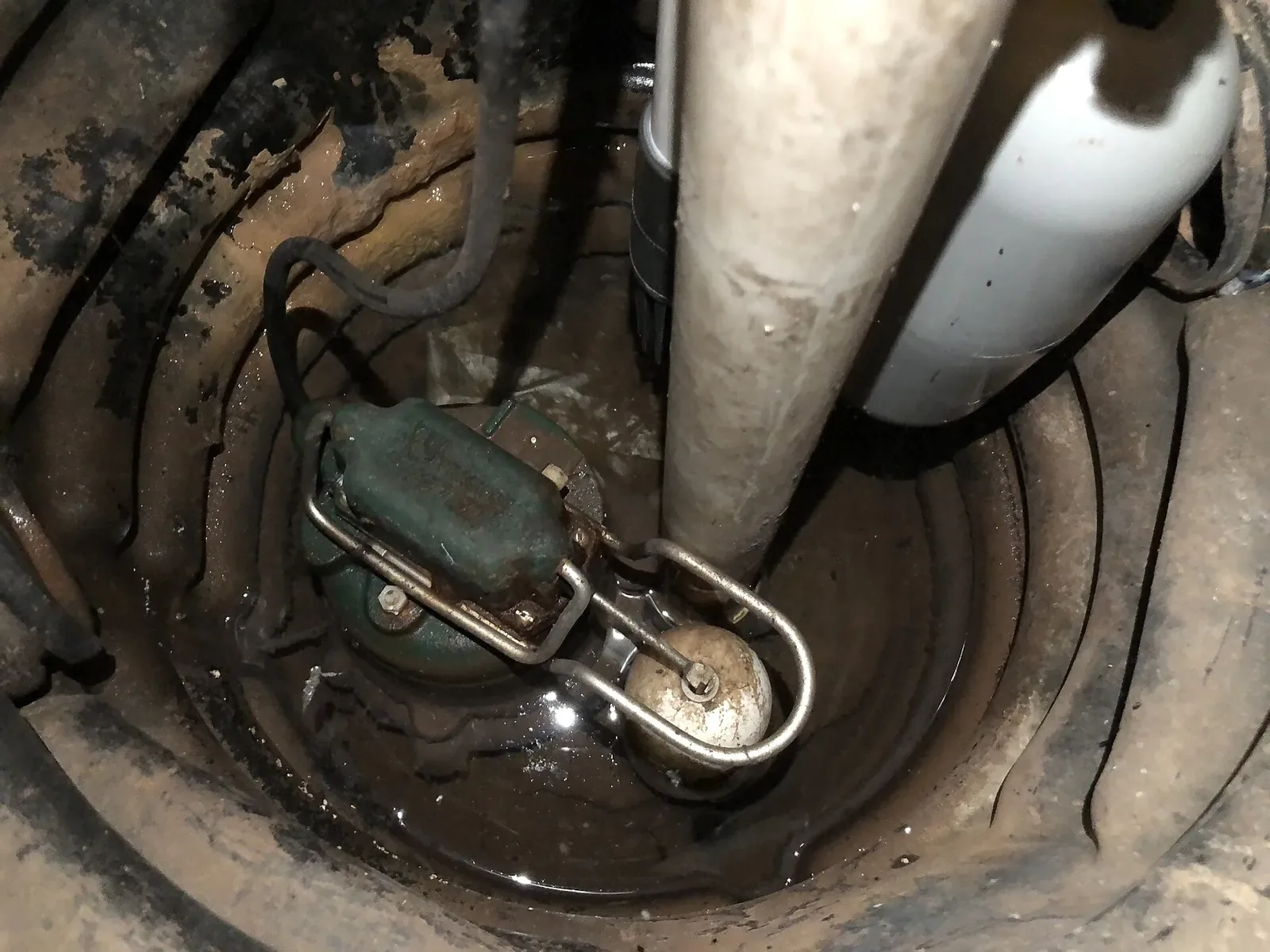
- Find the sump pit if there is one. Pour in a bucket of water and listen for the pump to start.
Floors that slope or crack
A floor slab sits on fill. If water has washed fill away, or if the ground under one part of the house has compressed, the slab drops. Signs are a crack running across the floor with one side lower, a gap at the base of the wall, or a door upstairs that no longer closes. A marble that rolls toward the same wall every time is a crude but useful test.
Companies often repair a sunken slab by pumping grout or foam under it to lift it, or by putting piers under the footing when the footing itself has dropped. Drainage comes first in either case, because a lifted slab over wet ground can drop again.
Do not ignore the sump and the gutters
Many Cedar Rapids basement complaints trace back to a pump that is too small, a discharge pipe that dumps water beside the house, or a gutter that overflows at a corner. These cost far less to fix than a wall. Any honest visit should start by asking where the water goes.
See also basement wall cracks, the cost page and the permit offices.
Sources, read 2 November 2026
- News reports on the June 2008 Cedar River flood: crest, homes flooded and demolished.
- State Historical Society of Iowa, primary source material on the flood buyout program.
- Iowa Geological Survey open file maps for Linn County and neighbouring quadrangles.