Basement wall cracks: which ones matter in eastern Iowa
A plain guide for poured concrete and block walls in Linn County.
Look at the crack before you look at the price
Stand in the basement with a flashlight and a ruler. Note which wall, how long the crack is, how wide at each end, and whether anything inside the room has moved. Write the date on a piece of tape and stick it next to the crack. Check again in three months. A crack that has not changed is a different problem from one that grows.
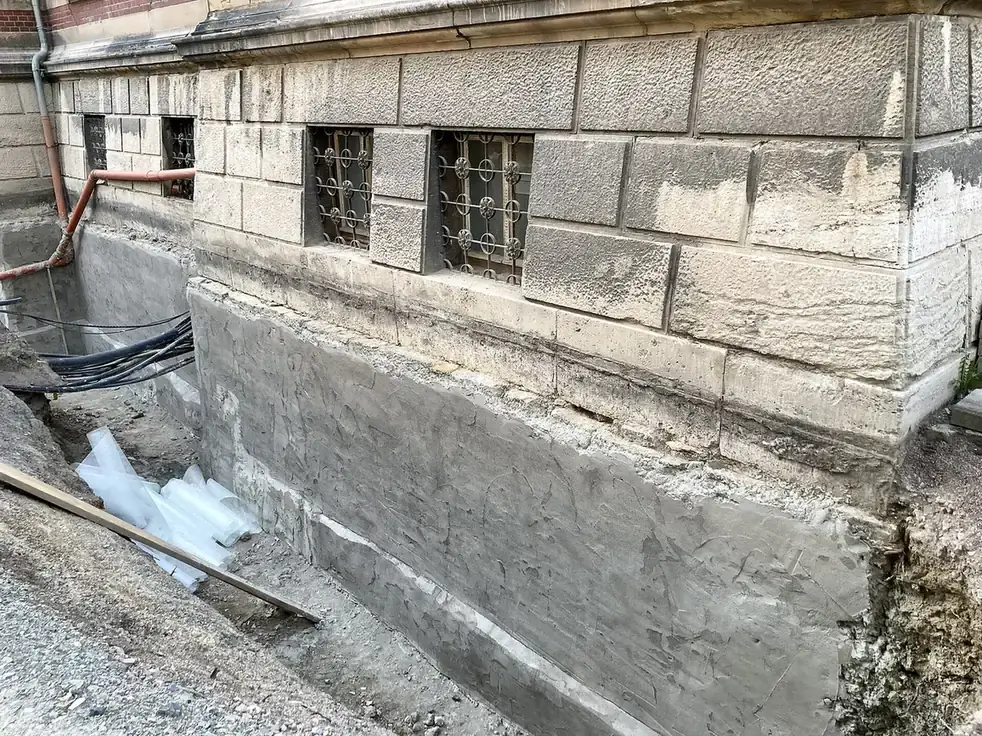
Three shapes, three likely stories
- Straight vertical hairline. Concrete shrinks as it cures, so these are common in newer poured walls and often do nothing except leak a little in a wet spring.
- Stair step along block joints. In a block wall this usually means one part of the foundation has moved relative to the next. It deserves a professional opinion.
- Horizontal line across the middle of the wall. This points to pressure from outside. Wet soil pushing on a wall for months can bow it inward, and in Iowa the freeze and thaw cycle adds pressure each winter.
Why Iowa winters matter
Water in the soil freezes and expands. Where the ground next to the wall stays soaked, that expansion pushes on the wall, and the thaw lets the soil settle back unevenly. Ask whoever inspects the house how deep your local building office expects footings to be, because frost depth is set locally and you should hear it from the permit office, not from a sales page.
What repair companies commonly do
This is background only. For a bowing wall, companies often install steel braces or wall anchors, or add carbon fiber straps on a wall that has only started to bend. For a straight crack that leaks, many inject epoxy or polyurethane from the inside. Digging down outside to waterproof and backfill with free draining stone is a bigger job. Which one fits depends on what is causing the crack, and a good inspector can show you the cause rather than only the symptom.
Questions for any visit
- What is pushing on this wall, and how do you know?
- Will the water outside be dealt with, or only the crack inside?
- Does this job need a permit from my city, and who applies?
- Can I see the scope in writing, with the method named?
- Is the company registered with the State of Iowa as a construction contractor? Ask for the number.
Most local companies offer free estimates, so collect more than one. Published Iowa prices are on the price page, and the permit page names the city office for each town.
Sources, read 2 November 2026
- Iowa Geological Survey, Surficial Geologic Materials of Linn County (open file map 98 2) and later quadrangle maps.
- General construction guidance on frost and soil pressure; confirm local depths with your city building office.